

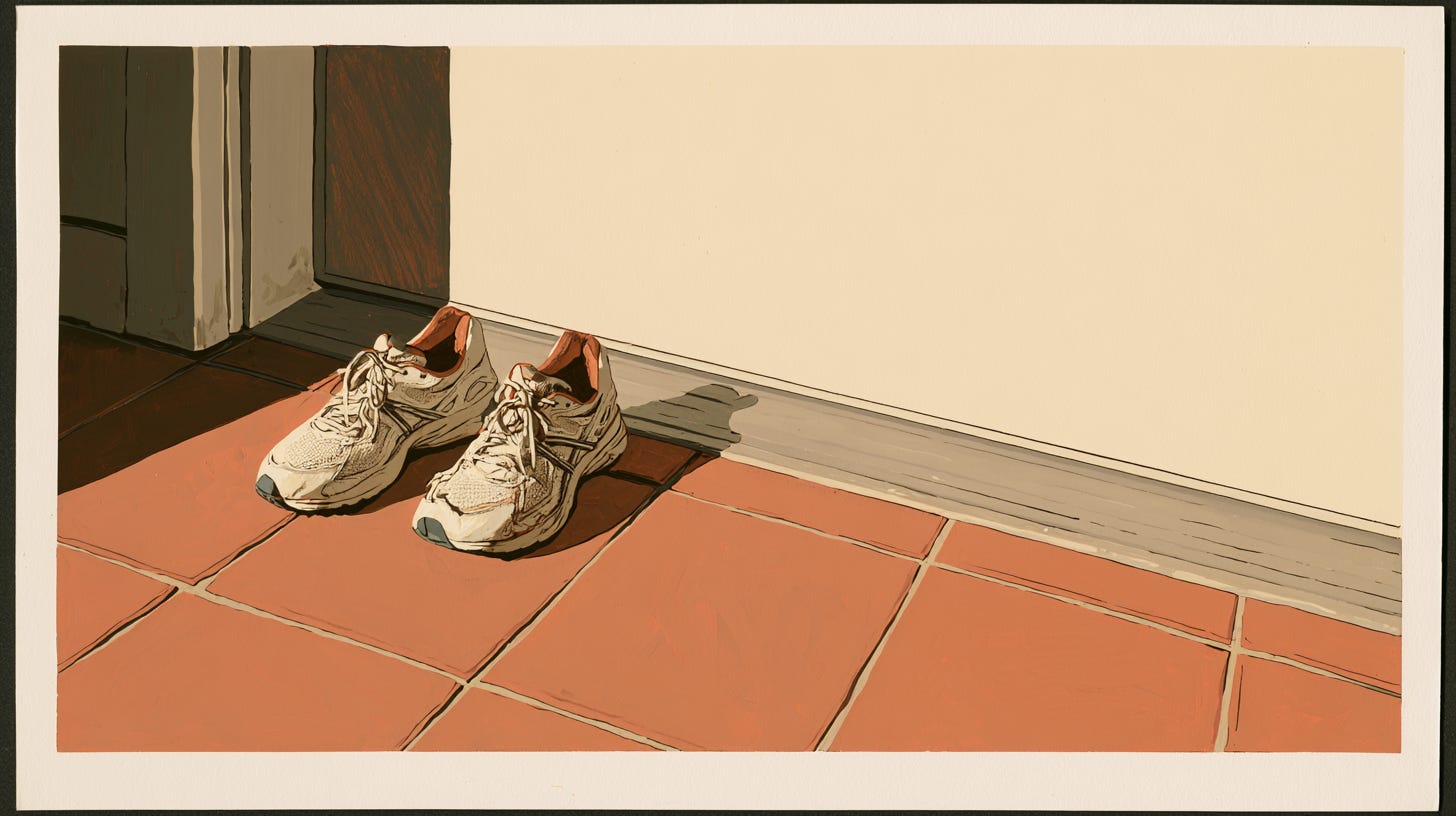
My father used to get up at five every morning for thirty years and go for a run, rain or heat or the morning after a terrible week. I asked him once, somewhere in my twenties, how he never missed a day. I expected an answer about willpower, about gritting it out. Instead, he shrugged and said the run was never really a decision anymore. He said deciding was the hard part, and he had only made that decision once, a long time ago, and never had to make it again.
I did not understand that answer for a long time. I thought discipline was supposed to feel like a fight, a daily battle against the part of you that wants to stay in bed. My father’s version sounded almost too easy, and easy felt like cheating.
Roy Baumeister’s research on willpower changed how I read that conversation. His past work on ego depletion suggested that self-control functions something like a limited resource, drained by use over the course of a day. That specific model has faced real challenges since, with later studies failing to replicate the depletion effect cleanly, and the debate over exactly how willpower works is still open. What has held up more consistently across the research, regardless of where you land on depletion, is a simpler and more useful finding. People who look highly disciplined from the outside are rarely fighting harder than everyone else. They have usually restructured their lives so that the fight almost never has to happen.
That reframes the whole question. My father was not winning a daily battle against his own resistance. He had removed the battle years earlier, when running became something that happened automatically at five in the morning, the same way brushing his teeth happened with no internal negotiation. The discipline was not in the run’s moment. It was in the original decision, made once, that turned a choice into a habit.
Walter Mischel’s research took this even further in a different direction. Researchers often remember his work on delayed gratification, the marshmallow studies from Stanford, as a story about raw willpower in children who wait for a second treat instead of eating the first one. But the more interesting part of his later analysis was about strategy, not strength. The children who waited longest were not the ones straining hardest against temptation. They were the ones who had made the marshmallow easier to ignore, covering their eyes, turning their chair around, distracting themselves with a song. The successful ones changed their situation instead of relying on raw resistance to carry them through it.
I think about that constantly now because it explains something that used to confuse me about people who seem effortlessly disciplined. They do not comprise stronger material. They have simply engineered fewer moments where discipline needs to show up as a fight at all. The environment does a large part of the work that willpower gets credit for.
Angela Duckworth’s research on grit adds the piece that ties this together. Her work found that sustained achievement correlates less with raw talent and more with a combination of passion and perseverance toward long-term goals, the willingness to keep showing up long after the initial motivation has faded. Grit, in her framing, is not a single act of resistance. It is a pattern, repeated so often it stops requiring fresh resolve each time.
Put together, these three threads point somewhere I did not expect when I started paying attention to any of this. Discipline was never about the willpower to push through resistance. It was about reducing how often resistance has to be pushed through at all by building the structure that turns a hard choice into an automatic one.
This idea inspired Habit Sequencing. It serves not as a guide to trying harder, but as a method for building sequences that eliminate daily negotiation entirely, much like my father’s five o’clock run ceased being a decision decades before he explained it to me. Read Habit Sequencing →.
If there is something you keep trying to will yourself into doing, stop adding more resolve to the plan. Look instead at the moment right before the resistance shows up, and change something about that moment. Set the shoes by the door. Turn the chair around. Attach the hard thing to something already automatic. The goal is not to become someone who fights harder. It is to build a life where the fight rarely needs to happen.
Borgella Street publishes research grounded in thinking like this every week, free, alongside deeper quarterly essays for subscribers who want to go further. Read more research articles →
Have advice, a letter, or a suggestion for us? Send it to kanpoteau@gmail.com.
See you next time,
The BSJ Team