


Three nights ago, I sat in my car outside the gym for four full minutes before going inside. The bag was already in the back seat. The class started in six minutes. My hesitation, a familiar feeling before difficult tasks, was all that blocked me. It never announces itself as a decision. It just sits there, patient, waiting to see whether I will move.
For years I assumed people who handled these moments well simply had more of something I lacked. More willpower. More grit. A sturdier internal engine, installed at birth and either present or absent. I watched other people finish projects, keep routines, and turn down the easy option, and I filed the difference in character, as though some people simply arrived better equipped. That assumption is common, and it is also wrong. Self-discipline does not function like a personality trait, fixed early and doled out unevenly. It functions like a skill, built through mechanisms anyone can learn, and three separate lines of research point to exactly how.
Roy Baumeister dedicated a significant portion of his career to exploring ego depletion, his theory that self-control relies on a finite mental energy reserve that diminishes throughout the day. In a prominent rendition, his initial trials showed that individuals who abstained from fresh cookies struggled longer with a challenging puzzle than those who weren’t tempted. Later replication attempts produced real debate within the field, and the specific mechanism remains contested among researchers today. But the larger reframe survived the debate. Discipline responds to conditions rather than sitting fixed inside a person. It shifts with sleep, stress, and how many decisions someone has already made that day before the moment in question arrives. A person who seems undisciplined at nine at night may simply be a person with nothing left after two hundred smaller decisions since morning.
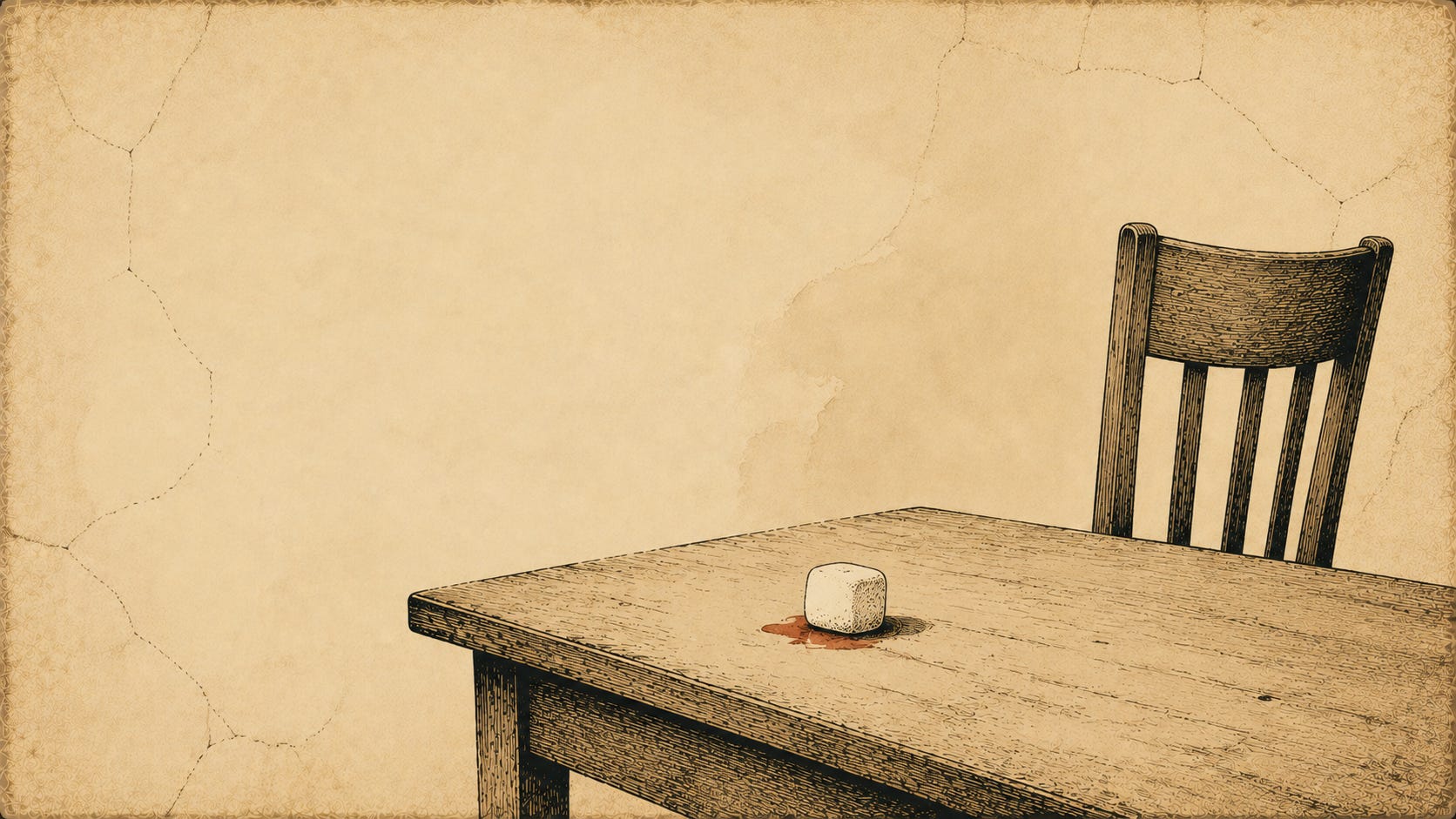
Walter Mischel found something similar from a different angle. His delayed gratification studies placed young children in front of one marshmallow with a simple choice. Eat it now, or wait alone in a room and receive two later. The popular retelling stops at the correlation between waiting and later life outcomes, treating the wait itself as proof of some inborn steadiness. The more useful finding sits in what the waiting children actually did in the room. They looked away from the treat, sang quietly to themselves, or imagined it as a photograph rather than a proper object sitting in front of them. The children who struggled stared directly at the reward and kept its pull immediate and vivid, which made resistance exhausting rather than manageable. Mischel later argued explicitly, across decades of follow-up research, that this kind of delay is trainable, not innate. The children were not exercising raw willpower. They were managing attention, a skill any adult can borrow on a Tuesday night outside a gym, or at any other point where a small choice sits between him and the thing he actually wants.
Angela Duckworth adds a third piece. Grit research shows sustained effort, not necessarily talent or intensity, leads to long-term goals. They simply keep showing up after the initial motivation fades, across weeks where nobody is watching and nothing feels urgent. The hard part of discipline rarely arrives one day one, when a decision still feels novel and even exciting. It arrives on day forty, once the habit has lost its novelty and has not yet become automatic. Her work suggests that the people who survive that stretch are not relying on a deeper well of willpower. They have built a structure around the goal: a scheduled check-in, a public commitment, a standing appointment that keeps it moving without requiring fresh motivation every single day.
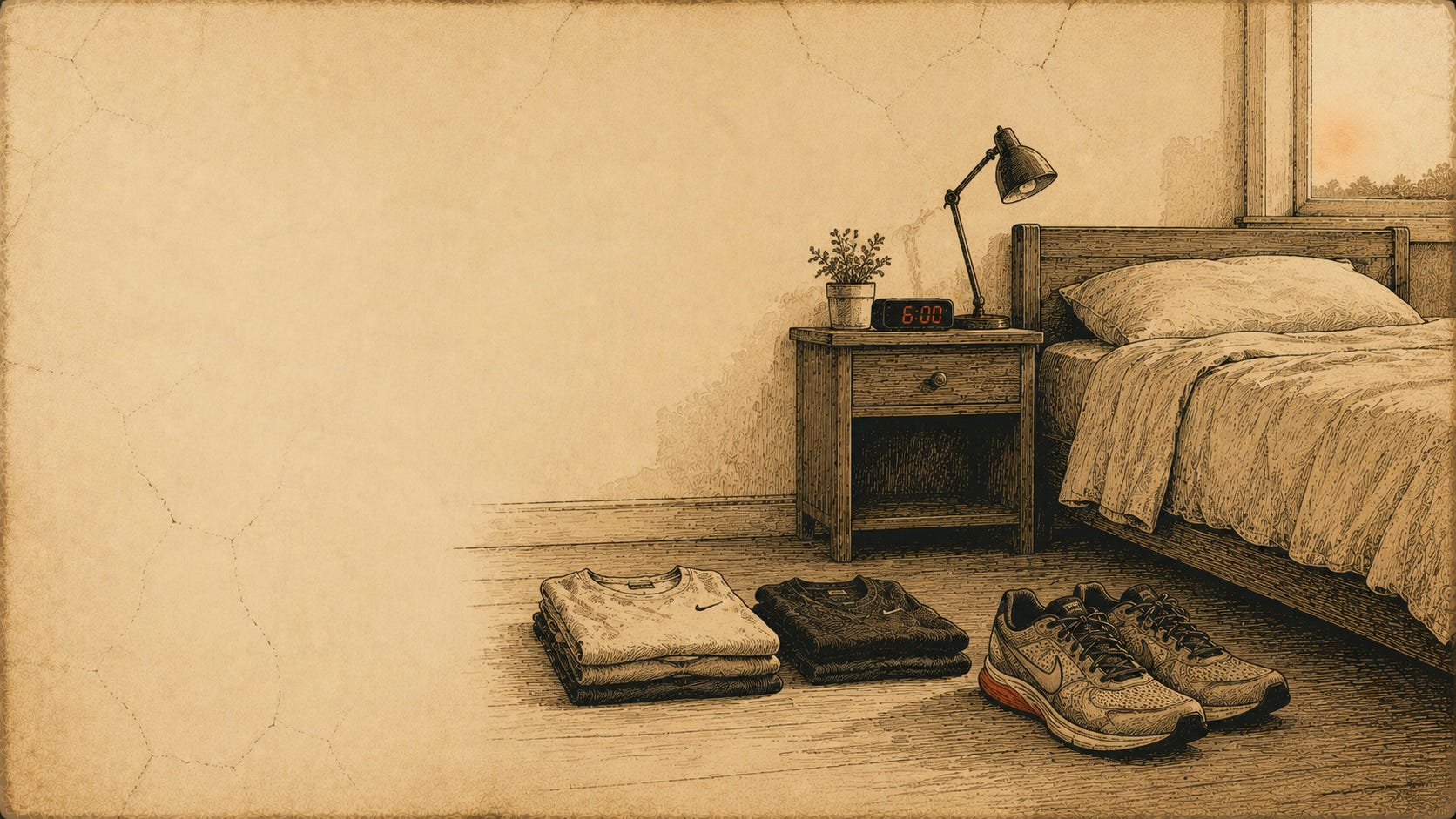
Put these three threads together, and the practical question changes. The goal stops being how to generate more willpower and becomes how to reduce how much willpower any single moment actually requires. Richard Thaler and Cass Sunstein showed that minor changes to the structure surrounding a choice produce large changes in behavior, often without the person noticing the influence at all. Move the vegetables to eye level in a cafeteria line and vegetable consumption rises, not because anyone became more disciplined, but because the environment did part of the work discipline used to have to do alone. Wendy Wood found the same pattern in daily habits. A large share of what people experience as personal discipline is actually environmental design in disguise, laid out clothes and visible equipment quietly carrying weight the mind used to carry by itself. My four minutes in that car existed because nothing in my environment had already decided for me ahead of time. I packed the bag, and that helped. The walk from the car to the door still required a fresh choice, and fresh choices are where discipline gets spent fastest and depleted soonest.
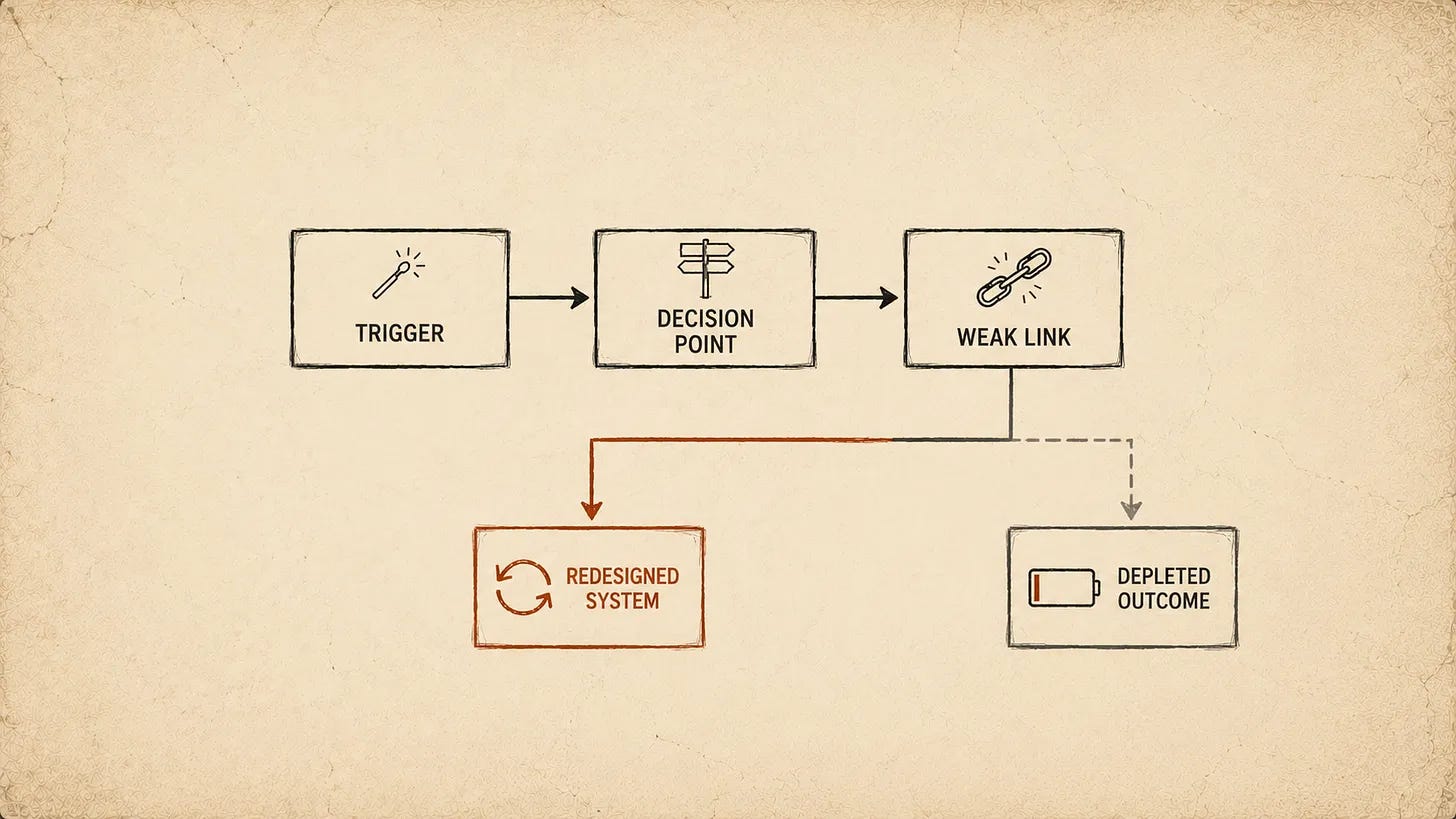
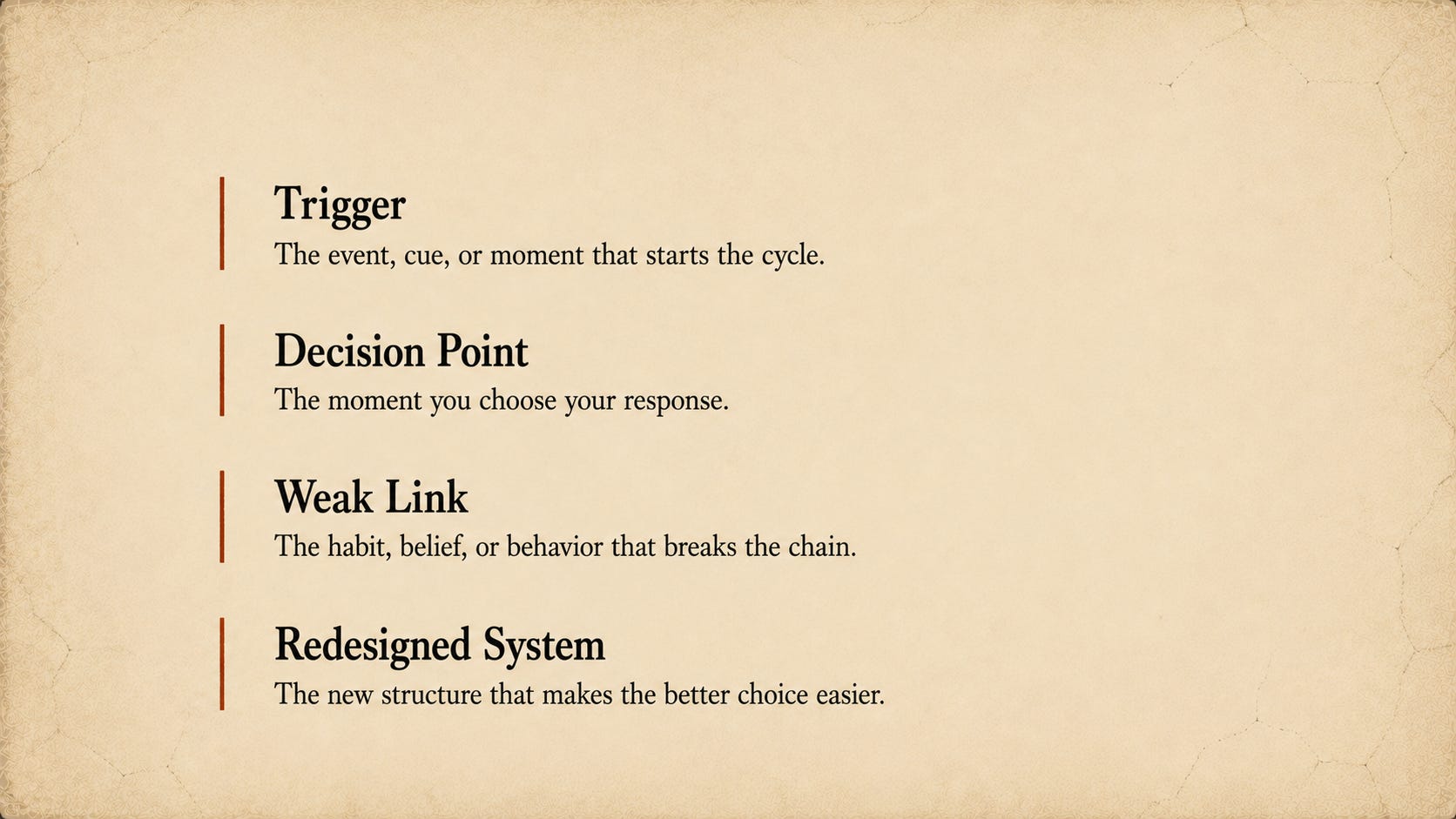
None of this describes a trait a person has or lacks. It describes a set of mechanisms, and building mechanisms is possible. A person who wants more discipline does not need a distinct personality to arrive. He needs to shrink the number of moments that re quire raw willpower, borrow an attention strategy for the moments that remain, and let the environment carry part of the weight the mind used to carry alone. The four minutes in my car were not evidence of a character flaw. They were evidence of one weak link in an otherwise sound system, a single unprotected moment in a chain that mostly held. Stop measuring yourself against people who appear to possess more of an invisible trait, as though someone issued them a different starting kit. Start looking instead at the specific moment where your own system breaks down and rebuild that one moment first.
The One Thing to Do Today
Pick the one moment today where your discipline usually breaks, the exact point where intention loses to friction. Name it specifically. Not the entire morning, but the ten minutes right after the alarm. Not the whole evening, the walk from the car to the front door. Remove one piece of friction from that exact moment before it arrives. Lay out the clothes, move the phone charger across the room, park closer to the entrance than you normally do. Do not fix the whole day. Fix the one weak link, and let tomorrow tell you whether it held.
This piece opens the conversation on how self-discipline actually works. The paid essays at Deliberate Project go further into the mechanics of building it, one system at a time.
Have advice, a letter, or a suggestion for us? Send it to kanpoteau@gmail.com.
See you next time,
The Deliberate Project Team
If one person you know is trying to build a more deliberate life, forward this to them.