

Self-discipline behaves less like a virtue and more like a currency. Most of the research used to prove that turns out to be far shakier than the popular version admits. Here is what actually holds up, and what to do with it.

A friend of mine runs a logistics company, and every January he makes the same promise. This year he will finally read every morning instead of scrolling, finally eat breakfast at the table instead of in the truck, and finally leave work at a decent hour. By March, he quietly abandons the promise, not because he lacks conviction but because he treats every one of those choices as a fresh test of character, something to win or lose in the moment. He has never once asked a more useful question, which is where his discipline actually goes during the day and why it always seems to run out before dinner.
He described a typical Tuesday to me once. He resisted the coffee shop pastry at seven. He held his tongue with a difficult driver at ten. He talked himself out of an unnecessary purchase at noon. By the time he got home at six, three separate acts of discipline already spent, the workout he actually cared about did not stand a chance against the couch. He called this a terrible night. It was really just an empty account.
That question sits at the center of one of the most contested corners of behavioral science, and the honest answer is messier than most advice admits. Behavioral scientists view self-discipline as a daily budget, not a virtue. This popular notion, though echoed widely, often relies on outdated studies. What almost never gets repeated is that the specific research usually cited to prove it has spent the last decade under serious challenge from some of the largest replication efforts in the history of psychology. This advice examines what works and builds a system from it, not theory.
The Myth of the Full Tank
Most advice about discipline assumes a full-tank model. Wake up with enough motivation, apply it correctly, and the day falls into line. The model feels intuitive because willpower feels like fuel in the moment, present in the morning and thinner by night. But the full tank model quietly implies something specific: that everyone starts at the same level and drains at the same rate, regardless of what fills the day. That specific claim is exactly the part of the discipline of science that has run into the most trouble.
Some people start the day with a smaller tank because of poor sleep, chronic stress, or a body already managing a health condition. Because their day includes many small, invisible decisions that never appear on a calendar, some people drain the tank faster. These decisions include what to wear, what to eat, and how to respond to a difficult email. None of this shows up as effort in the traditional sense. It shows up as fatigue, and by evening the person has nothing left for the choice that actually mattered. The question worth asking is which part of this story the research actually supports, and which part is closer to a comforting myth about why the couch won.
What Baumeister Actually Found, and Why the Story Changed
Baumeister’s 1998 research on ego depletion, which he termed, provided a strong scientific basis for the discipline as-budget concept, suggesting self-control depletes a limited daily mental energy. In his original experiments, Baumeister found that people who resisted one temptation, such as a plate of fresh cookies in one well-known version, did not give up as soon on a hard puzzle afterward as people who had not been asked to resist anything at all. Self-control appeared to function like a muscle, drawing from a shared resource regardless of what kind of self-control was being exercised.

The finding launched an entire subfield, and for fifteen years it went unchallenged. Then the field’s replication crisis reached it directly. In 2016, a Registered Replication Report involving twenty-three independent laboratories and over two thousand participants attempted to reproduce the effect using the exact procedure Baumeister’s group endorsed, and found no reliable evidence that ego depletion occurred at all. Defenders argued that the specific task used in that replication was not representative of the broader construct. In 2021, a second and even larger test addressed that objection directly, using thirty-six laboratories, over three thousand participants, and a task paradigm Baumeister himself had endorsed as the fairer test. That second effort produced the same result. No reliable depletion effect appeared.
This is not a minor academic footnote. Two of the largest, most carefully designed replication efforts ever run in social psychology both failed to find the specific mechanism that launched the entire self-control as a a limited resource idea. Baumeister and his longtime collaborator Dianne Tice have pushed back forcefully, pointing two hundreds of supportive studies published before the replication era and arguing ego depletion remains among the better replicated findings in the field by other criteria. The debate is genuinely unresolved, and a careful reader deserves to know that rather than the tidy version where a famous study simply proves a comforting metaphor.
What survives, and survives on much sturdier ground, is a related but distinct body of research that never depended on the specific ego depletion paradigm at all. A comprehensive meta-analysis of sleep and self-control across sixty-one independent studies found consistent links between both sleep quality and sleep duration and how well people regulate their impulses, at both the between person level and the within person level, meaning the same individual shows measurably weaker self-control on nights following poor sleep than on nights following good sleep. The mechanism has real neurological grounding too. Sleep deprivation reliably reduces activity in the prefrontal cortex, the brain region most responsible for inhibiting impulses and following through on plans. Whatever the fate of the specific cookie and radish paradigm, the broader claim that fatigue erodes self-regulation rests on genuinely solid evidence, evidence that points toward sleep rather than an abstract willpower muscle.
The Marshmallow Test, Revisited
The second pillar of the popular discipline story comes from Walter Mischel, whose delayed gratification studies placed young children in front of one marshmallow with a choice: eat it now or wait alone and receive two. The finding that made the study famous was that a longer waiting period as a preschooler correlated with stronger outcomes years later. For decades, researchers treated this correlation as nearly settled proof that early self-control determines a person’s future.
Those original samples were small and drawn overwhelmingly from families connected to Stanford, hardly representative of children broadly. In 2018, researchers obtained a larger and more socioeconomically diverse sample to test whether the original relationship held up. It did, but at roughly half the strength originally reported, and the relationship shrank by about two-thirds once the researchers controlled for family background, early cognitive ability, and home environment. An extra minute of waiting at age four still predicted a real but modest gain in achievement at age fifteen, mostly among children from lower-income households, and the researchers nearly eliminated the effect once they accounted for those background factors.
Following up, the two research teams sharpened their disagreement. Statisticians argued that the newer study’s methods understated the relationship because of its measurement of waiting time, but the original authors defended their approach. Neither side has produced a knockout result, which is itself the point. A finding treated for decades as close to settled fact turns out, on closer inspection, to be an active and unresolved scientific argument.
Useful findings from Mischel’s original work were never really the correlation, anyway. They centered on the mechanism by which children waited. Mischel and his collaborators filmed the sessions and found that successful children were not exercising a raw force of will. They looked away from the marshmallow, sang quietly, or mentally reframed it as a picture rather than a proper object in front of them. Children who struggled stared directly at the reward and kept its pull vivid. Later, teaching children these specific attention strategies directly improved their wait times, evidence that the skill transfers through teaching. That mechanism, attention management as a substitute for raw willpower, has held up far better under later scrutiny than the grand claim that a four-year-old’s patience predicts his future.
Grit, or Conscientiousness by Another Name
Duckworth’s grit research, linking passion and perseverance to long-term success, gained acclaim after studies showed it predicted outcomes better than talent.
Grit and conscientiousness is nearly indistinguishable. The same analysis revealed that grit’s proposed higher-order structure failed statistical tests. Grit showed only a moderate correlation with actual performance and retention outcomes, a much less significant relationship than the popular narrative suggests. Critics have since labeled this pattern a jangle fallacy, two different names describing what is largely the same underlying trait.
This does not mean persistence stops mattering. It means the specific claim that grit is a novel, teachable trait distinct from ordinary conscientiousness deserves real skepticism. The part of Duckworth’s original observation worth keeping is behavioral rather than dispositional. Her West Point data showed that cadets who dropped out during the demanding initial training had strong physical scores and impressive resumes, meaning talent alone predicted almost nothing about who stayed. What separated finishers looked less like a fixed trait and more like a habit of continuing on ordinary days, which is a behavior a system can support directly, regardless of what personality label eventually attaches to it.
Duckworth sees grit as a part of conscientiousness, useful for long-term goals. That is a more modest and more honest claim than the one that made grit famous, and it survives meta-analytic scrutiny considerably better.
The Fight Over Whether Nudges Work at All
The last pillar of most discipline advice is environmental design, an idea drawn from Richard Thaler and Cass Sunstein’s work on choice architecture, that minor changes to the structure surrounding a decision to produce large changes in behavior. This idea has arguably had the most real-world influence of anything discussed here, shaping government policy units across multiple countries.
It has also become the subject of a sharp and ongoing statistical fight. A large 2022 meta-analysis covering 447 nudge experiments concluded that choice architecture is a broadly effective behavior-change tool. Months later, a group of methodologists published a pointed rebuttal in the same journal arguing that once the analysis is corrected for publication bias, no reliable evidence for the average nudge effect remains, since studies showing weak or null nudge effects are far less likely to get published than studies showing strong ones, which inflates the apparent average effect size in the existing literature. The original authors and other statisticians disputed that correction, and the exchange is still unresolved in the academic literature as of this writing.
What both camps agree on is more useful than what they dispute. Even skeptics of the aggregate published literature acknowledge that some individual nudges, particularly changing a default option, produce large and well-documented effects, organ donation opt-out systems being the clearest example. What the publication bias critique actually undermines is the confident claim that the average nudge, sight unseen, reliably works. It does not undermine the narrower, more defensible claim that removing friction from a specific decision, tested and observed in your own life rather than assumed from a population average, reduces how often that decision fails.
What Actually Survives
Put the honest version of this research together, and the picture looks different from the confident story most discipline advice tells, but it is not empty. Fatigue measurably erodes self-regulation, and the sturdiest evidence for those points specifically at sleep rather than an abstract willpower reservoir. Attention management, looking away from temptation rather than confronting it directly, remains a genuinely trainable skill regardless of what happened to the broader marshmallow narrative. Persistence on ordinary, unglamorous days predicts outcomes better than talent does, even if the specific packaging of that idea as a distinct trait called grit has not held up well. And removing friction from a specific, tested decision still helps, even though nobody should assume a nudge will work just because a textbook says nudges work on average.
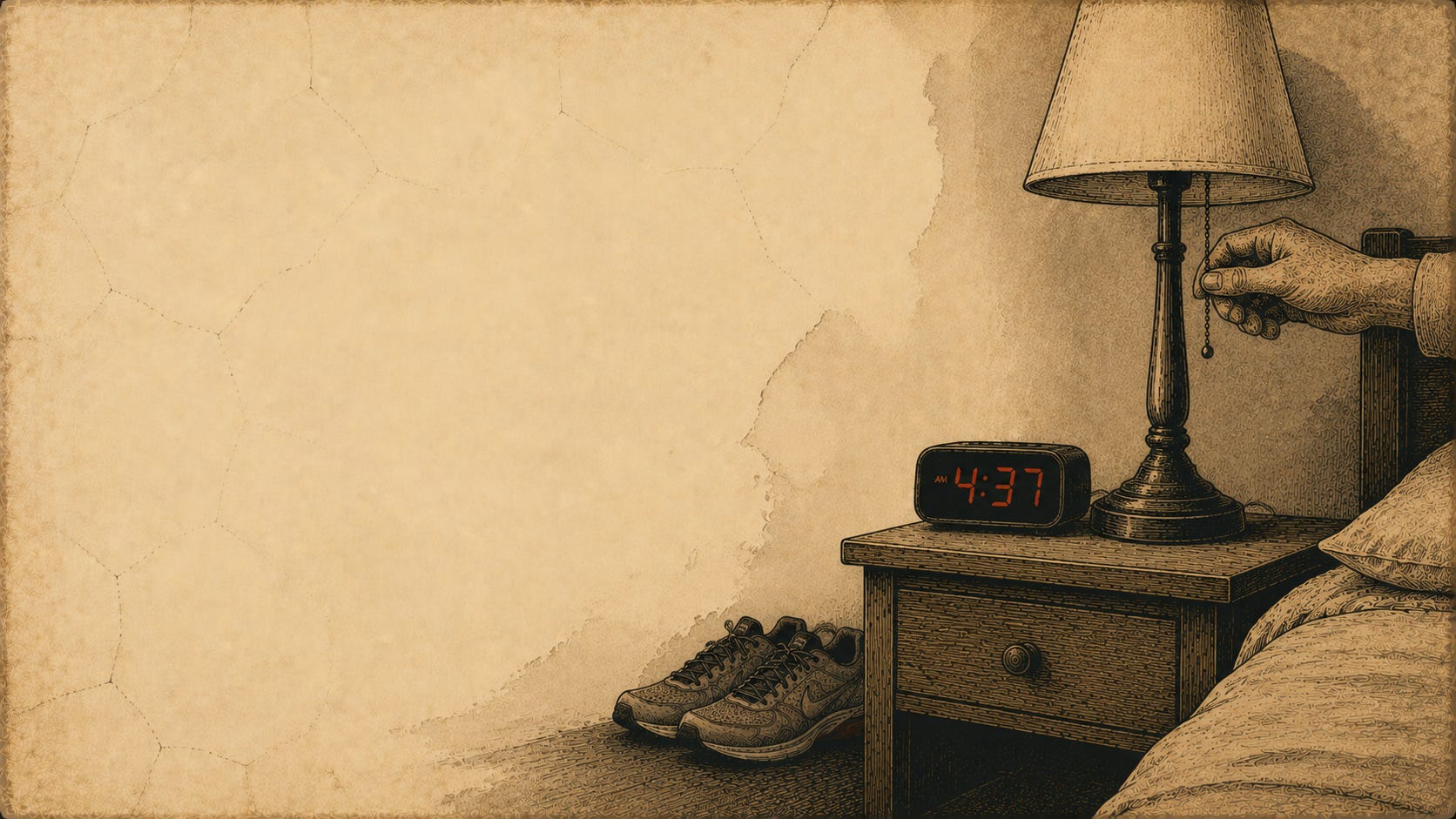
Wendy Wood’s research on habit formation fits cleanly into this more careful picture, because her core claim was never about population-level nudge effect sizes. It was about repetition and a stable context. People who exercise consistently have usually built stable cues around the behavior: shoes by the door, a fixed time slot, a route already traveled, so the decision stops being made fresh each day and becomes closer to automatic. That claim rests on observational habit research that has weathered scrutiny reasonably well, in part because it makes a narrower promise than either ego depletion or population-wide nudging ever did.
Running the System
A working system emerges from what survives, and it looks less like ancient willpower folklore and more like careful personal experimentation. It has three parts.
The first part is protecting sleep specifically, not vaguely managing energy in the abstract. If fatigue is going to undermine one decision today, the sturdiest research says that decision is more likely to survive if it happens after a good night of sleep rather than a bad one, and the least reliable evidence in this entire field is the idea that any daytime task, resisted earlier, drains a separate reservoir available for later tasks.
Attention management for the specific temptations that keep winning forms the second part. Create a strategy to disengage from distractions. This is the part of Mischel’s work that survived the closest scrutiny, and it costs almost nothing to test directly in your own life.
Treating every environmental change as a personal experiment rather than a guaranteed nudge makes up the third part. Lay out the clothes. Move the equipment somewhere visible. Remove an app instead of promising not to open it. Then actually watch whether it works for you specifically over two or three weeks, rather than assuming it must work because a popular book says defaults are powerful. Some will. Some will not. The honest version of discipline research suggests personal verification matters more than borrowed confidence from an average that may not apply to your particular life.
My friend running the logistics company did not need a better version of willpower this January. He required sleep, a couch-resisting strategy, and self-testing his environment. The following month, he tried a version of this, protecting sleep before his gym mornings and moving his workout clothes into direct view. This approach succeeded, not because his character had changed, but because he stopped relying on research that proved less settled than advertised to bolster his confidence.
The One Thing to Do Today
Pick the one decision today that most depends on how tired you already are and protect the sleep that comes before it tonight rather than trying to force the decision itself through willpower tomorrow. Set a specific bedtime for tonight, fifteen minutes earlier than usual, and treat it as the actual intervention rather than an afterthought to the decision it supports.
This piece is part of an ongoing series on how discipline actually functions, drawn from the same research, including its genuine uncertainties, that shapes everything published here at Deliberate Project.
See you next time,
The Deliberate Project Team
References
1. Baumeister, Roy F., Ellen Bratslavsky, Mark Muraven, and Dianne M. Tice. “Ego Depletion: Is the Active Self a Limited Resource?” Journal of Personality and Social Psychology, 1998.
2. Vohs, Kathleen D., Brandon J. Schmeichel, and colleagues. “A Multisite Preregistered Paradigmatic Test of the Ego Depletion Effect.” Psychological Science, 2021.
3. Hagger, Martin S., and colleagues. “A Multilab Preregistered Replication of the Ego Depletion Effect.” Perspectives on Psychological Science, 2016.
4. Guarana, Cristiano L., Ji Woon Ryu, Ernest H. O’Boyle Jr., Jaewook Lee, and Christopher M. Barnes. “Sleep and Self Control: A Systematic Review and Meta Analysis.” Organizational Behavior and Human Decision Processes, 2021.
5. Mischel, Walter, Ebbe B. Ebbesen, and Antonette Raskoff Zeiss. “Cognitive and Attentional Mechanisms in Delay of Gratification.” Journal of Personality and Social Psychology, 1972.
6. Watts, Tyler W., Greg J. Duncan, and Haonan Quan. “Revisiting the Marshmallow Test: A Conceptual Replication Investigating Links Between Early Delay of Gratification and Later Outcomes.” Psychological Science, 2018.
7. Duckworth, Angela L., Christopher Peterson, Michael D. Matthews, and Dennis R. Kelly. “Grit: Perseverance and Passion for Long Term Goals.” Journal of Personality and Social Psychology, 2007.
8. Credé, Marcus, Michael C. Tynan, and Peter D. Harms. “Much Ado About Grit: A Meta Analytic Synthesis of the Grit Literature.” Journal of Personality and Social Psychology, 2017.
9. Thaler, Richard H., and Cass R. Sunstein. Nudge: Improving Decisions About Health, Wealth, and Happiness. Yale University Press, 2008.
10. Mertens, Stephanie, Mario Herberz, Ulf J. J. Hahnel, and Tobias Brosch. “The Effectiveness of Nudging: A Meta Analysis of Choice Architecture Interventions Across Behavioral Domains.” Proceedings of the National Academy of Sciences, 2022.
11. Maier, Maximilian, František Bartoš, T. D. Stanley, David R. Shanks, Adam J. L. Harris, and Eric Jan Wagenmakers. “No Evidence for Nudging After Adjusting for Publication Bias.” Proceedings of the National Academy of Sciences, 2022.
12. Wood, Wendy. Good Habits, Bad Habits: The Science of Making Positive Changes That Stick. Farrar, Straus and Giroux, 2019.